Behind the Vinyl
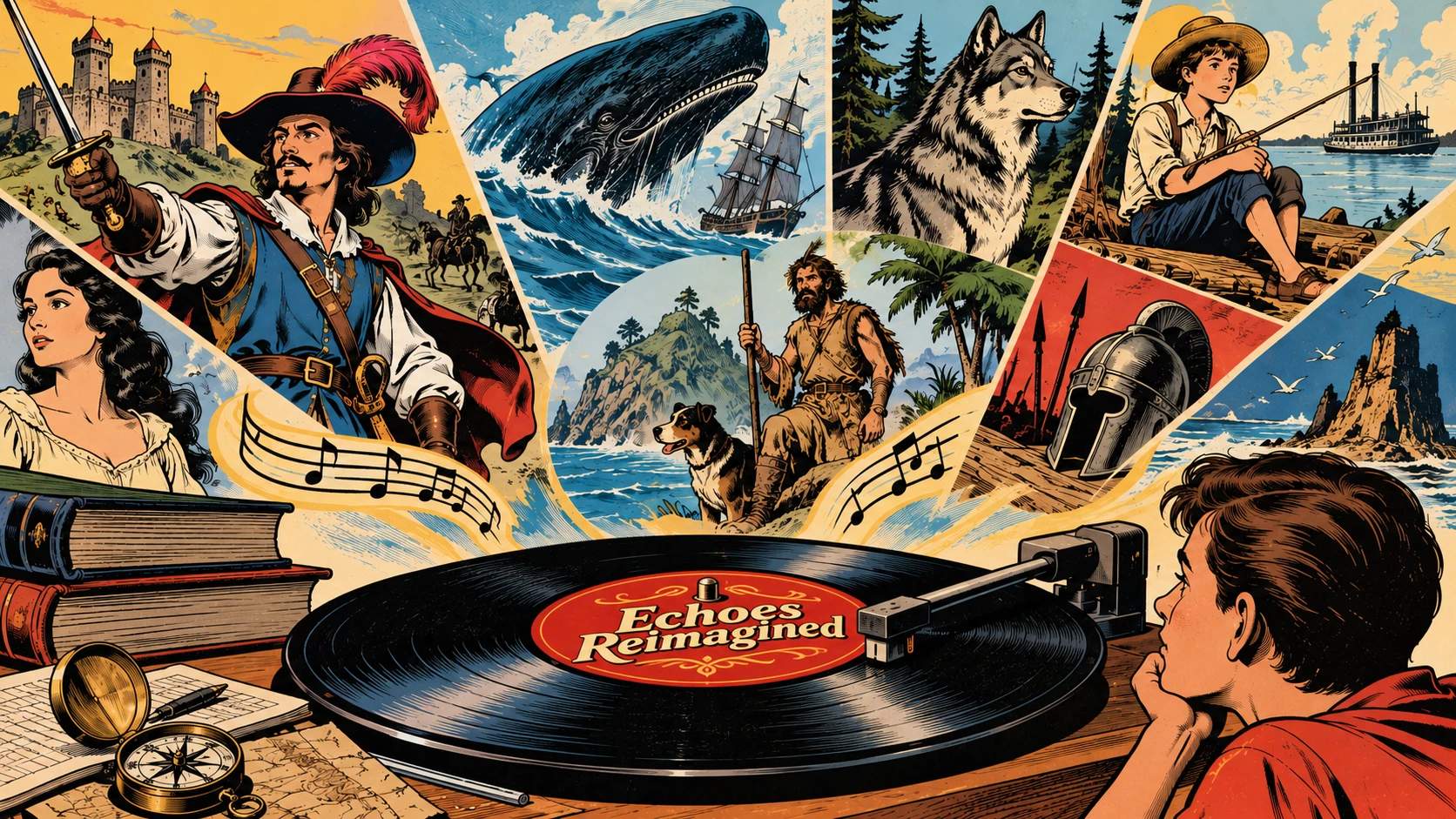
There is more inside a song than what you hear on the first spin. Every Echoes Reimagined song begins somewhere inside a classic story. Its Echo may come from a person, an animal, or something we don't usually think of as a character at all—a ship, an island, a house, an object, a landscape, or another powerful presence within the story.
An Echo isn't trying to retell the entire book. Instead, it explores the experiences, relationships, conflicts, choices, and ideas that matter from its particular place in the story. Behind the Vinyl will show you how to listen for more than the story being sung, discover how music adds meaning, and consider how perspective changes what gets told.
Drop the Needle
Start by listening. Don't worry about analyzing every word or figuring everything out on the first play. Notice what grabs your attention—a lyric, an instrument, the singer's voice, a change in the music, or simply the feeling the song creates.
Does the track sound adventurous, tense, lonely, playful, angry, mysterious, triumphant, or something else? As you listen, keep one question in mind: What seems to matter most to this Echo? You don't need an answer yet. Just listen and see where the song takes you.
More Than Lyrics
The words tell only part of the story. Music can reveal things that aren't written in a single lyric, so listen to how the track is built as well as what is being sung. Verses may carry an Echo through important experiences or changes, while a chorus can return to an idea, emotion, conflict, or belief that refuses to go away. A bridge may signal a turning point, and an outro can show where the Echo has arrived—or leave something unresolved.
Listen beyond the structure, too. Is the music racing forward or holding back? Does the voice sound confident, frightened, angry, proud, lonely, or uncertain? Notice which instruments stand out and when the music becomes louder, quieter, heavier, faster, or more restrained.
You may also hear a particular musical idea return throughout a song. This is sometimes called a motif, and it might take the form of a few notes, a rhythm, an instrument, or another recognizable sound. When it returns, listen for whether it has changed and consider what that change might add to the story.
Sometimes the music tells you something the words never say.
Hear Another Side
Now think about the choices behind the song. Why did this Echo focus on these particular moments? Why were certain people, relationships, places, objects, conflicts, or events important enough to become lyrics, while others received only a line or were left out completely?
Those choices matter because an Echo is an interpretation from a particular position in the story. It doesn't have to tell the whole story. It focuses on the parts that matter from where that Echo stands, which means another Echo from the same book may see the same people and events very differently.
Something one Echo sees as courageous might look reckless to another. What feels like loyalty from one side may feel like betrayal from the other. That doesn't necessarily mean someone is lying; perspective can be shaped by ambitions, fears, loyalties, experiences, relationships, and beliefs. Rather than assuming one Echo gives you the whole story, listen for what it emphasizes, what it overlooks, and what another perspective might reveal.
Not every Echo has to be human, either. A ship, island, building, object, landscape, or other important presence can provide another position from which to explore the story. We aren't pretending an island secretly thinks like a person. Instead, its Echo can draw attention to what happened around it, who depended on it, who feared or pursued it, what it made possible or impossible, and how it helped shape events.
Same story. Different position. Another side to hear.
Give It a Second Spin
Now go back and listen again, this time bringing more with you. Listen for the structure of the song as well as its words. Notice the instruments, rhythms, changes in the voice, and recurring musical ideas. Think about why certain moments became lyrics and others didn't, and question the Echo's perspective instead of simply accepting everything you hear.
A line you barely noticed the first time may suddenly seem important. A chorus may feel different after you understand what happened between its first and final appearance, or an instrument you hardly noticed may change how you understand a person, conflict, or event.
The song hasn't changed. You have.
That's one of the reasons a second spin can be more interesting than the first. You aren't simply hearing the song again; you're listening with new questions, new connections, and a better sense of what might be happening beneath the surface.
Dig Deeper
The Echo is a doorway into a much larger story. The original book lets you investigate what you've heard for yourself: find the events behind the lyrics, discover what happened before and after them, meet characters who never made it into the song, and look for evidence that supports—or complicates—the Echo's perspective.
The classic works featured in My Epic Echoes are in the public domain in the United States, and we'll help you find ways to explore the original stories for yourself. Many can be read for free through Project Gutenberg, and some are also available as free, human-narrated audiobooks through LibriVox. When a title isn't available through either collection, check the book's course page for another source. Depending on what's available, you can read the story, listen to it, or even follow the text while listening.
The journey doesn't have to stop with the book. Many classic stories have inspired movies, television programs, and other adaptations, and we'll point you toward some of those versions when appropriate. Watching an adaptation can be entertaining, but it also gives you another interpretation to investigate.
Just like an Echo, every adaptation makes choices. A filmmaker decides what to include, what to leave out, whose perspective receives the most attention, how characters are portrayed, and which parts of the story deserve the most time. Compare those choices with the original book and with the Echoes you've heard. Ask what changed, why it might have changed, and how those decisions affect your understanding of the story.
Listen to the Echo. Hear another side. Read it. Listen to it. Watch it reimagined. Then dig deeper and discover what the story has to say to you.